
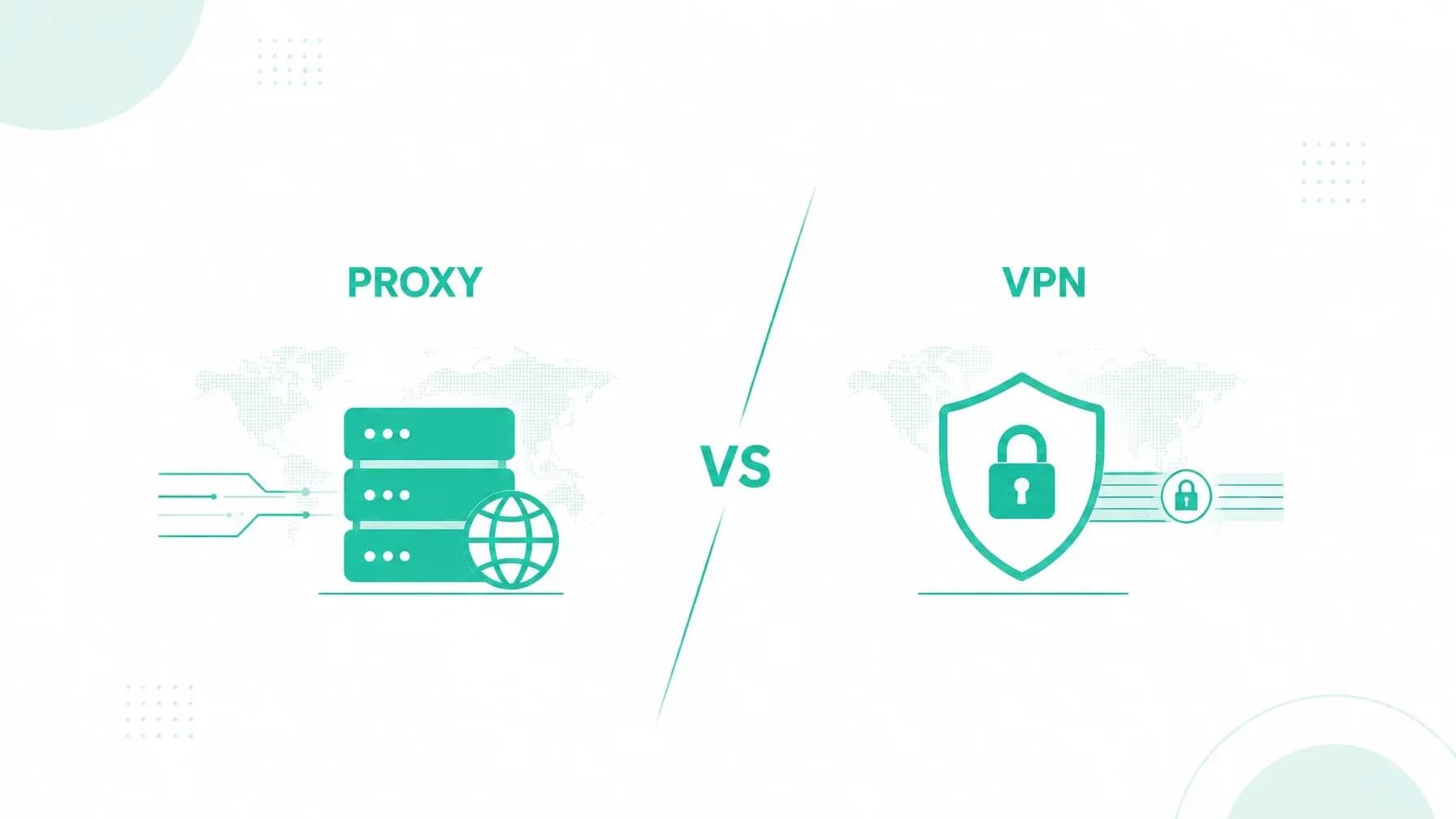
If you're looking for a way to hide your IP address, improve online privacy, or access websites from different locations, you've probably come across two common solutions: proxies and VPNs.
While both can help mask your IP address, they work very differently and provide different levels of privacy, security, and performance.
In this guide, we'll explain how proxies and VPNs work, compare their advantages and disadvantages, and help you decide which option is right for your needs in 2026.
What Is a Proxy?
A proxy server acts as an intermediary between your device and the website you're visiting.
Instead of connecting directly to a website, your request first goes through a proxy server. The website then sees the proxy server's IP address rather than your real IP.
This makes proxies useful for:
- Hiding your IP address
- Accessing region-restricted websites
- Testing websites from different locations
- Basic browsing anonymity
Many users search for a free web proxy because it requires no software installation and can often be used directly in a browser.
How Does a Proxy Work?
When you connect through a proxy:
- Your browser sends a request to the proxy server.
- The proxy server forwards the request to the target website.
- The website responds to the proxy server.
- The proxy server sends the content back to you.
The process is relatively simple and can help disguise your location, but it typically does not encrypt your internet traffic.
What Is a VPN?
A Virtual Private Network (VPN) creates an encrypted connection between your device and a VPN server.
Unlike a proxy, a VPN protects all internet traffic coming from your device, including:
- Web browsers
- Mobile apps
- Streaming services
- Online games
- Messaging platforms
Because all data travels through an encrypted tunnel, VPNs offer significantly stronger privacy and security.
Proxy vs VPN: What's the Main Difference?
The biggest difference is encryption.
A proxy primarily hides your IP address, while a VPN both hides your IP address and encrypts your traffic.
A proxy generally works only with specific applications or browser sessions. A VPN protects the entire internet connection on your device.
If your goal is simply to access a website from another location, a proxy may be sufficient.
If you want better privacy, protection on public Wi-Fi, and stronger security for everyday browsing, a VPN is usually the better choice.
When Should You Use a Proxy?
A proxy can be useful when you need to:
- Access a specific website quickly
- Change your visible location
- Perform basic web scraping
- Test website localization
- Bypass simple geographic restrictions
For short-term tasks, a web proxy may be a convenient solution.
When Is a VPN the Better Option?
A VPN is generally recommended if you:
- Frequently use public Wi-Fi networks
- Want stronger online privacy
- Need encrypted internet traffic
- Stream content from different regions
- Work remotely
- Access sensitive accounts online
For most users, a VPN provides a higher level of protection and a better overall browsing experience.
Are Free Proxies Safe?
Many users search for free proxies or free web proxies, but it's important to understand the potential risks.
Free proxy services may:
- Display excessive advertising
- Log user activity
- Offer limited server locations
- Provide slower speeds
- Lack proper security measures
Before using any free proxy service, review its privacy policy and reputation carefully.
Browser Proxy Extensions
Proxy extensions for Chrome, Edge, and Firefox remain popular because they are easy to install and activate.
Benefits include:
- One-click setup
- Quick IP changes
- Lightweight operation
- No separate application required
However, browser-based proxies only protect browser traffic and do not secure the rest of your internet connection.
Which Is Better in 2026?
The answer depends on your needs.
A proxy may be sufficient if you simply need to access a website from another location or hide your IP temporarily.
A VPN is usually the better choice if privacy, security, and long-term protection are important.
As online tracking and cybersecurity threats continue to evolve, many users are moving away from traditional web proxies and choosing VPN services for comprehensive protection.
Frequently Asked Questions
Is a proxy the same as a VPN?
No. A proxy primarily masks your IP address, while a VPN masks your IP address and encrypts all internet traffic.
Which is faster, a proxy or a VPN?
A proxy can sometimes be faster because it does not encrypt traffic. However, speed depends on server quality and network conditions.
Can I use a free proxy?
Yes, but free proxies often come with limitations and potential privacy risks.
Is a VPN safer than a proxy?
In most situations, yes. VPNs provide encryption and broader protection for your online activity.
Should I use a proxy or a VPN?
If you only need to access a specific website, a proxy may be enough. For everyday browsing and privacy protection, a VPN is generally the better solution.
Final Thoughts
Both proxies and VPNs can help hide your IP address, but they serve different purposes.
Proxies are useful for quick, lightweight tasks, while VPNs provide stronger privacy, security, and protection across your entire device.
For most internet users in 2026, a VPN offers the best balance of convenience, security, and online freedom.